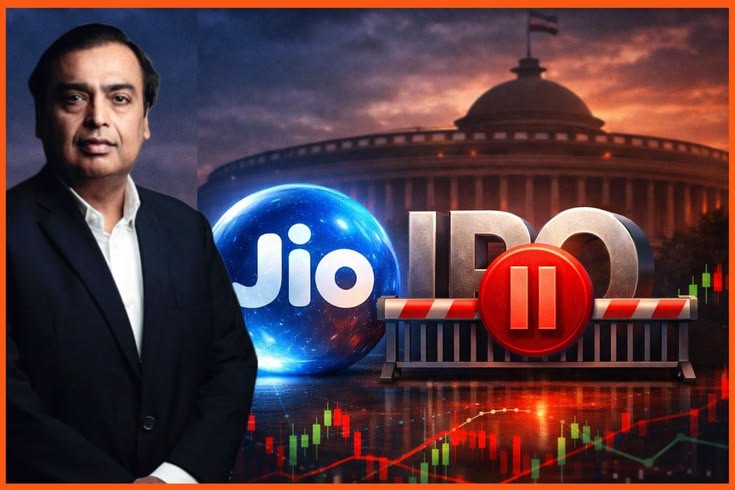
The Jio IPO 2026 date is the most anticipated financial event in India right now, with investors, analysts, and everyday citizens all wondering when they will get their chance to own a piece of the country’s largest telecom and digital services company. If Mukesh Ambani’s vision materializes as planned, this could become the biggest public listing in Indian stock market history, surpassing even the record breaking LIC IPO of 2022. Whether you are a first time investor saving up for your first IPO application or a seasoned trader calculating grey market premiums, this guide breaks down everything you need to know about the Jio IPO in plain and simple language.
Jio IPO 2026 Date: When Will It Happen?
The Jio IPO 2026 date has not been officially confirmed yet, but market analysts and company statements point toward a listing in the second half of 2026, most likely between October and December. Mukesh Ambani announced at the 2024 Reliance AGM that Jio would go public once its 5G rollout reached critical mass and the business model stabilized.
Here is the expected timeline based on current indications:
- DRHP Filing: Expected by August 2026
- SEBI Approval: Typically takes 2 to 3 months after DRHP submission
- Roadshows: September to October 2026 in India and international financial centers
- IPO Opening: Expected November 2026
- IPO Closing: 3 to 4 days after opening
- Listing Date: Expected December 2026 on NSE and BSE
Reliance has a history of timing its major corporate actions strategically. The Jio IPO will likely coincide with favorable market conditions and maximum investor appetite. The company wants this to be a landmark event that captures global attention.
Jio IPO Price Band: How Much Will Shares Cost?
The Jio IPO price band is the subject of intense speculation, with estimates ranging widely depending on valuation methodology. Based on Jio’s last private funding round and comparable global telecom valuations, analysts expect a price band that values the company between 9 and 11 lakh crore rupees.
Here is how the pricing might look:
- Expected Price Band: 850 to 950 rupees per share (subject to final board approval)
- Face Value: 10 rupees per share
- Lot Size: Likely 15 shares based on SEBI norms for large issues
- Minimum Investment: Approximately 12,750 to 14,250 rupees
- Retail Category: Up to 2 lakh rupees as per SEBI guidelines
At the upper end of this range, Jio would raise approximately 75,000 to 90,000 crore rupees from the public issue. This would make it the largest IPO in Indian history, comfortably exceeding LIC’s 21,000 crore rupee offering in 2022.
The pricing will be crucial. Too high and retail investors might stay away. Too low and the company leaves money on the table. Reliance’s investment bankers will be walking a tightrope.
Jio IPO Valuation: Is It Worth the Hype?
The Jio IPO valuation debate has divided market experts. Some believe Jio deserves a premium due to its market leadership and digital ecosystem. Others worry that the valuation already prices in years of future growth.
Here is the valuation breakdown:
- Enterprise Value Estimate: 9 to 11 lakh crore rupees
- Revenue Multiple: Approximately 8 to 10 times annual revenue
- EBITDA Multiple: Around 18 to 22 times annual EBITDA
- Subscriber Base: Over 48 crore users as of mid 2026
- ARPU: Average revenue per user of approximately 210 rupees per month
Comparisons with global peers are tricky. Jio is not just a telecom company. It is a digital platform encompassing broadband, entertainment, fintech, cloud services, and e-commerce. This ecosystem approach justifies a higher multiple than pure play telecom companies.
However, investors should note that Jio’s profitability has been pressured by aggressive 5G investments and pricing competition. The path to sustained margins remains uncertain despite the massive subscriber base.
Jio IPO DRHP Details: What the Document Will Reveal
The Jio IPO DRHP details will become public once Reliance files the Draft Red Herring Prospectus with SEBI. This document is essentially the company’s report card for potential investors.
Here is what the DRHP will contain:
- Business Overview: Detailed description of Jio’s services, technology, and market position
- Financial Statements: Audited results for the last 3 to 5 years
- Risk Factors: Every possible risk that could affect the business
- Use of Proceeds: How the raised capital will be deployed
- Management Discussion: Strategic vision and growth plans
- Shareholding Pattern: Current ownership structure before the IPO
- Legal Proceedings: Any ongoing litigation or regulatory issues
- Related Party Transactions: Dealings with other Reliance group companies
The DRHP will be scrutinized intensely by analysts, competitors, and regulators. Any red flags in the document could affect investor sentiment and pricing.
Jio IPO GMP: What the Grey Market Says
The Jio IPO GMP has been the subject of intense speculation even before the official announcement. In unofficial grey market trading, Jio shares have reportedly commanded premiums ranging from 120 to 180 rupees per share.
Here is what this implies:
- Current GMP Range: 120 to 180 rupees per share
- Implied Listing Price: 970 to 1,130 rupees based on upper band
- Potential Listing Gain: 13 to 19 percent if GMP holds
- GMP Reliability: Highly speculative given the IPO is months away
Grey market premiums for Jio should be taken with extra caution. The issue is so large and so anticipated that unofficial trading is based more on hype than actual demand assessment. GMP can swing wildly as the IPO date approaches.
Investors should treat GMP as entertainment rather than investment advice. The real value of Jio will emerge only after listing and several quarters of public market performance.
Jio IPO How to Apply: Your Step by Step Guide
Understanding Jio IPO how to apply is essential since this issue will likely see massive oversubscription. Getting shares allotted will require careful planning.
Here is your application strategy:
- Open a Demat Account: If you do not have one, open it now with a SEBI registered broker. Do not wait until the last minute.
- Fund Your Account: Keep at least 2 lakh rupees ready in your bank account linked to ASBA.
- Choose Your Broker: Popular options include Zerodha, Upstox, Groww, ICICI Direct, and HDFC Securities.
- Apply on Day One: For heavily oversubscribed IPOs, applying on the first day improves your chances. Do not wait until the last day.
- Bid at Cut Off: Select the cut off price option to improve allotment probability. This means you agree to pay whatever final price is determined.
- Use Multiple Applications: Family members with separate PAN numbers can apply individually to increase household allotment chances.
- Retail vs HNI: Retail category has better allotment ratios than high net worth individual categories in oversubscribed issues.
The UPI based application process has made IPO investing simpler than ever. You can apply directly through your broker’s mobile app without visiting a bank branch.
Why Jio IPO Could Be India’s Biggest Listing
Several factors make the Jio IPO potentially historic:
- Scale: At 75,000 to 90,000 crore rupees, it would be 3 to 4 times larger than any previous Indian IPO
- Brand Recognition: Jio is a household name. Even people who have never bought a stock know this company
- Digital India Story: Jio embodies India’s digital transformation narrative that resonates with global investors
- Reliance Track Record: Previous Reliance group listings have performed well, building investor confidence
- Foreign Investor Interest: Global funds are eager for exposure to India’s consumption and digital growth story
- Retail Participation: The company is expected to reserve a significant portion for retail investors, democratizing ownership
The listing day itself could be a spectacle. With millions of retail applicants and massive institutional interest, trading volumes could break records.
Understanding Jio’s Business Model
Before investing, you need to understand how Jio makes money. It is more complex than just selling mobile recharge plans.
Revenue streams include:
- Mobile Services: Voice, data, and SMS plans for consumers and businesses
- Fiber Broadband: JioFiber home and enterprise internet services
- Jio Platforms: Digital services including JioCinema, JioSaavn, and cloud services
- Enterprise Solutions: B2B connectivity and digital transformation services
- Devices: JioPhone and JioBook sales, though margins here are thin
- Fintech: JioPayments Bank and digital financial services
The beauty of Jio’s model is cross selling. A mobile subscriber can be upsold to broadband, entertainment, and financial services. This ecosystem approach increases customer lifetime value significantly.
Risks Every Investor Should Consider
No investment is without risks, and Jio carries several significant ones:
- Intense Competition: Airtel and Vodafone Idea remain formidable competitors. A price war could crush margins.
- Regulatory Risk: Telecom is heavily regulated. TRAI decisions on spectrum pricing, interconnection charges, and tariffs directly impact profitability.
- Capital Intensity: 5G networks require continuous investment. Jio may need to raise more capital even after the IPO.
- ARPU Stagnation: Average revenue per user has been slow to grow despite 5G upgrades.
- Debt Levels: Jio carries significant debt from its network buildout. Interest obligations pressure cash flows.
- Related Party Concerns: Transactions with other Reliance group companies could raise governance questions.
How Jio Compares to Global Telecom Peers
Comparing Jio with international telecom companies provides valuation context:
China Mobile
- Subscribers: Over 90 crore
- Market Cap: Approximately 12 lakh crore rupees
- ARPU: Lower than Jio but massive scale
Verizon (USA)
- Subscribers: Around 12 crore
- Market Cap: Approximately 14 lakh crore rupees
- ARPU: Much higher than Jio due to US pricing power
Vodafone (UK)
- Subscribers: Over 30 crore globally
- Market Cap: Approximately 2 lakh crore rupees
- Challenges: Struggling with debt and competition
Jio’s valuation sits between these extremes. It has better growth prospects than mature Western markets but faces stiffer competition and lower pricing power than China Mobile.
What Happens After Listing
For investors considering holding beyond listing day, here is what to expect:
- Lock In Periods: Promoter shares typically face lock in restrictions for 1 to 3 years
- Index Inclusion: Jio will likely enter Nifty 50 and Sensex quickly due to its size, forcing index funds to buy
- Quarterly Results: Public market scrutiny means every quarterly result will move the stock price
- Dividend Policy: Reliance has historically been conservative with dividends. Jio may follow suit to fund growth
- Strategic Moves: Watch for acquisitions, partnerships, and new service launches that could reshape the business
If you need help understanding any aspect of the Jio IPO or want personalized investment guidance, you can always reach out to us and we will help you navigate this landmark offering.
Frequently Asked Questions
What is the Jio IPO 2026 date?
The Jio IPO 2026 date has not been officially confirmed but is expected in the second half of 2026, most likely between October and December. Mukesh Ambani indicated the listing would happen once 5G rollout reached critical mass. The expected timeline includes DRHP filing by August 2026, SEBI approval over 2 to 3 months, roadshows in September to October, and the actual IPO opening around November 2026 with listing expected in December 2026.
What is the Jio IPO price band?
The Jio IPO price band is expected to be in the range of 850 to 950 rupees per share based on analyst estimates and Jio’s last private funding valuation. At this range, the company would be valued between 9 and 11 lakh crore rupees. The lot size will likely be 15 shares, making minimum investment approximately 12,750 to 14,250 rupees. The final price band will be determined by Reliance’s board and investment bankers closer to the IPO date.
What is the Jio IPO valuation?
The Jio IPO valuation is estimated between 9 and 11 lakh crore rupees based on various methodologies. This translates to approximately 8 to 10 times annual revenue and 18 to 22 times annual EBITDA. With over 48 crore subscribers and an ARPU of around 210 rupees, Jio’s scale justifies a premium over pure play telecom companies. However, profitability pressures from 5G investments and competitive pricing remain concerns that could affect valuation multiples.
What are the Jio IPO DRHP details?
Jio IPO DRHP details will be revealed once Reliance files the Draft Red Herring Prospectus with SEBI, expected by August 2026. The document will contain Jio’s business overview, audited financial statements for 3 to 5 years, risk factors, use of proceeds, management discussion, shareholding pattern, legal proceedings, and related party transactions. The DRHP is essentially the company’s comprehensive report card for potential investors and will be intensely scrutinized by analysts and regulators.
What is the Jio IPO GMP?
The Jio IPO GMP is currently speculated between 120 and 180 rupees per share in unofficial grey market trading, implying a potential listing price of 970 to 1,130 rupees and listing gains of 13 to 19 percent. However, this GMP should be treated with extreme caution since the IPO is months away and unofficial trading is based more on hype than actual demand assessment. GMP for such a large and anticipated issue can swing wildly as the date approaches.
How can I apply for the Jio IPO?
You can apply for the Jio IPO by first opening a demat account with a SEBI registered broker if you do not already have one. Fund your bank account with at least 2 lakh rupees for retail category applications. Apply on the first day of the IPO through your broker’s app using the UPI based process. Select the cut off price option to improve allotment chances in what will likely be a heavily oversubscribed issue. Family members with separate PAN numbers can apply individually to increase household chances. Popular brokers include Zerodha, Upstox, Groww, ICICI Direct, and HDFC Securities.