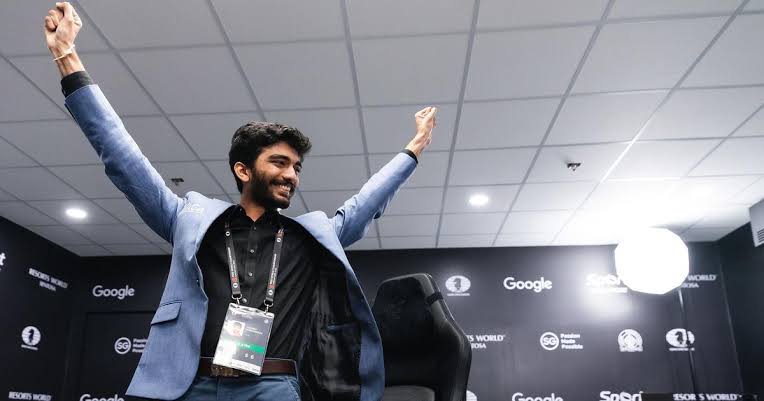
Gukesh Dommaraju world chess champion is a title that millions of Indians never thought they would see in their lifetime, yet here we are celebrating a teenager who has rewritten the record books and placed India firmly at the summit of global chess. On July 5, 2026, Gukesh defeated Nodirbek Sindarov of Uzbekistan in a dramatic final match to become the youngest world chess champion in history at just 18 years old. Whether you are a chess enthusiast who followed every move of the championship, a parent wondering how a child from Chennai achieved the impossible, or simply someone who loves a good underdog story, this guide covers every detail of Gukesh’s incredible journey.
Gukesh Dommaraju World Chess Champion: How the Final Unfolded
The Gukesh Dommaraju world chess champion moment came after 14 grueling games against Nodirbek Sindarov in Singapore, with the final score standing at 7.5 to 6.5 in Gukesh’s favor. The match was a clash of two prodigies, both barely out of their teens, representing the new generation that has overtaken the old guard of Carlsen, Caruana, and Nepomniachtchi.
Here is how the championship match played out:
- Games 1 to 4: Both players traded draws, feeling each other out with cautious opening play. The tension was palpable as neither wanted to make the first mistake.
- Game 5: Gukesh struck first with a brilliant queen sacrifice in a complex middlegame position. The move shocked commentators and gave him a 3 to 2 lead.
- Games 6 to 8: Sindarov fought back fiercely, winning Game 7 with precise endgame technique to level the score at 4 to 4.
- Game 9: Another draw. Both players were running on pure adrenaline and caffeine at this point.
- Game 10: Gukesh won a marathon 78 move game that lasted over 6 hours. His stamina and concentration at this stage were superhuman.
- Games 11 to 13: Two more draws and a Sindarov win in Game 13 tied the match at 6.5 to 6.5 going into the final game.
- Game 14: The decider. Gukesh played the Ruy Lopez with white pieces and gradually outplayed Sindarov in a technical endgame, converting a one pawn advantage into victory.
When Sindarov resigned on move 67, Gukesh buried his face in his hands and wept. The arena erupted. India erupted. A new king had been crowned.
Gukesh vs Sindarov World Championship 2026: Two Prodigies, One Crown
The Gukesh vs Sindarov world championship 2026 was not just a match. It was a generational shift in chess. Both players were born in 2006, making this the first world championship final contested by two players who grew up with smartphones, YouTube chess tutorials, and AI training partners.
Here is how their paths to the final differed:
Gukesh’s Road to the Final
- Candidates Tournament: Finished first in the 2025 Candidates held in Toronto, ahead of established stars like Fabiano Caruana and Ian Nepomniachtchi.
- Quarterfinal: Defeated Hikaru Nakamura 4.5 to 3.5 in a match that showcased Gukesh’s superior preparation in sharp opening lines.
- Semifinal: Beat Ding Liren 5.5 to 4.5, with the Chinese champion praising Gukesh’s maturity beyond his years.
Sindarov’s Road to the Final
- Candidates Tournament: Finished second, just half a point behind Gukesh, proving the Uzbek was no fluke.
- Quarterfinal: Eliminated Magnus Carlsen 4.5 to 3.5 in what many called the passing of the torch moment.
- Semifinal: Defeated Alireza Firouzja 5 to 4 in a match filled with wild tactical battles.
Both players represented the post Carlsen era. Their final was less about experience and more about raw calculation speed, opening preparation depth, and nerves of steel.
Gukesh Dommaraju Biography: From Chennai Schoolboy to World Champion
The Gukesh Dommaraju biography reads like a movie script that Hollywood would reject for being too unbelievable. Born on May 29, 2006, in Chennai, Tamil Nadu, Gukesh showed an early aptitude for patterns and puzzles that his parents recognized and nurtured.
Here is his journey in key milestones:
- Age 7: Started playing chess after his father Rajnikanth, an ENT surgeon, bought him a chess set to keep him occupied during summer vacation.
- Age 9: Won the under 9 national championship, defeating opponents twice his age with embarrassing ease.
- Age 12: Became the second youngest Grandmaster in history at the time, earning the title in just 3 years and 4 months from starting tournament play.
- Age 14: Crossed the 2700 Elo rating barrier, a mark that only a handful of teenagers had ever achieved.
- Age 16: Won the Chess Olympiad gold medal on board one for India, leading the team to a historic silver medal finish.
- Age 17: Won the 2025 Candidates Tournament, becoming the youngest ever challenger for the world championship.
- Age 18: Became world champion by defeating Sindarov in Singapore.
Gukesh’s training regimen has been legendary. He reportedly studies chess for 10 to 12 hours daily, analyzing games with engines, working with a team of seconds including former world champion Viswanathan Anand, and playing online blitz to sharpen his tactical reflexes.
His parents made enormous sacrifices. His mother Padma quit her medical practice to manage his tournament travel and education. His father reduced his surgical hours to support the family’s chess focused lifestyle. The investment paid off in the most spectacular way possible.
Gukesh Dommaraju Rating 2026: Numbers That Tell the Story
The Gukesh Dommaraju rating 2026 numbers confirm what the world championship result already proved. He is the strongest chess player on the planet right now.
Here are his current ratings:
- Classical Rating: 2,785 Elo points, making him the world number one
- Rapid Rating: 2,760 points, ranked second globally
- Blitz Rating: 2,790 points, ranked first globally
- Peak Classical Rating: 2,792 points, achieved in June 2026
To put these numbers in perspective, Magnus Carlsen’s peak classical rating was 2,882. Gukesh is still 97 points below that mark, but at 18 years old, he has years to close the gap. Most grandmasters peak in their late twenties or early thirties.
Gukesh’s rating progression has been remarkably consistent. Unlike some prodigies who plateau after early success, he has improved steadily every year since becoming a grandmaster. His team credits this to a balanced approach that emphasizes understanding over memorization and mental health over grinding.
Gukesh Youngest World Chess Champion: Breaking Every Record
The Gukesh youngest world chess champion record is not just about his age. It is about the sheer improbability of what he achieved in a sport dominated by players with decades of experience.
Here is how his age compares to previous champions:
- Gukesh Dommaraju: 18 years, 1 month, 6 days at time of winning
- Garry Kasparov: 22 years, 7 months when he became champion in 1985
- Magnus Carlsen: 22 years, 11 months when he won in 2013
- Anatoly Karpov: 24 years when he became champion in 1975
- Viswanathan Anand: 31 years when he won the FIDE title in 2000
Gukesh shattered Kasparov’s record by over 4 years. In a sport where experience and pattern recognition are supposed to matter more than youth, this is almost incomprehensible.
Anand himself has called Gukesh’s achievement the most significant moment in Indian chess history. Coming from the man who held the world title for 6 years and inspired a generation of Indian players, that is the highest possible praise.
Gukesh Dommaraju Age Net Worth: What Success Brings
The Gukesh Dommaraju age net worth conversation has become inevitable after his world championship victory. At 18, he is now one of the wealthiest young athletes in India.
Here is what his financial picture looks like:
Prize Money
- World Championship Winner’s Share: Approximately 1.1 million euros, roughly 10 crore rupees
- Candidates Tournament Winnings: Approximately 2 lakh euros
- Previous Tournament Earnings: Estimated 50 to 60 lakh rupees over his career
- Total Chess Earnings: Approximately 11 to 12 crore rupees
Endorsements and Sponsorships
- Baseline: Already had deals with chess platforms and sportswear brands worth an estimated 2 to 3 crore rupees annually
- Post Championship: Experts expect his endorsement value to jump to 10 to 15 crore rupees annually
- Potential Partners: Luxury brands, automobile companies, and educational platforms are reportedly in discussions
Estimated Net Worth
- Current: Approximately 15 to 20 crore rupees including earnings and existing endorsements
- Projected 2027: Could reach 40 to 50 crore rupees if endorsement deals materialize as expected
These numbers are impressive for anyone, let alone an 18 year old. However, Gukesh has indicated that his focus remains on chess rather than commercial ventures. His team manages business matters while he concentrates on the board.
Impact on Indian Chess and Sports Culture
Gukesh’s victory has implications far beyond the chess world.
- Youth Participation: Chess academy enrollments across India have reportedly surged by 40 percent in the week following his win.
- Sponsorship Interest: Corporate sponsors who previously ignored chess are now exploring partnerships, seeing the sport’s growing audience.
- Government Recognition: The Tamil Nadu government has announced a 5 crore rupee cash award and a state honor. The central government is expected to follow with national recognition.
- Media Coverage: Chess received front page coverage in Indian newspapers for the first time in decades, suggesting mainstream acceptance.
- Role Model Effect: Parents across India are now viewing chess as a viable career path for their children, not just an extracurricular activity.
Training Methods: What Made Gukesh Special
Understanding Gukesh’s training offers lessons for aspiring players:
- Engine Analysis: He uses Stockfish and Leela Chess Zero to analyze positions deeply, but focuses on understanding why moves work rather than memorizing engine evaluations.
- Opening Preparation: His team prepares novelties in mainline openings, often deviating from established theory on move 15 or 20 to take opponents into unfamiliar territory.
- Physical Fitness: Gukesh trains like an athlete, with cardio, strength work, and yoga to maintain stamina during long games.
- Mental Coaching: He works with a sports psychologist to manage pressure, anxiety, and the emotional rollercoaster of elite competition.
- Game Review: Every tournament game is reviewed extensively with his team, identifying mistakes and patterns to improve.
What Comes Next for Gukesh
At 18, Gukesh’s career is just beginning. Here is what lies ahead:
- Title Defense: He must defend his title against the next challenger in 2028, likely the winner of the 2027 Candidates Tournament.
- Rating Goals: Closing the gap to Carlsen’s peak rating of 2,882 is a natural target.
- Team Events: Leading India at the Chess Olympiad and World Team Championship.
- Rapid and Blitz: Already strong in faster formats, he could dominate those world championships too.
- Legacy Building: Sustaining excellence over decades is harder than winning once. Gukesh will be measured against Anand’s longevity and Carlsen’s dominance.
If you want to follow Gukesh’s journey closely or need help finding chess coaching resources for yourself or your child, you can always reach out to us and we will point you toward the best programs and communities.
Frequently Asked Questions
How did Gukesh Dommaraju become world chess champion?
Gukesh Dommaraju became world chess champion by defeating Nodirbek Sindarov of Uzbekistan 7.5 to 6.5 in a 14 game match held in Singapore in July 2026. At 18 years old, he became the youngest world champion in history, breaking Garry Kasparov’s record by over 4 years. Gukesh won the decisive 14th game with white pieces after the match was tied at 6.5 to 6.5, converting a one pawn advantage in a technical endgame. His path to the final included winning the 2025 Candidates Tournament and defeating Hikaru Nakamura and Ding Liren in earlier knockout rounds.
What was the Gukesh vs Sindarov world championship 2026 result?
The Gukesh vs Sindarov world championship 2026 ended with Gukesh winning 7.5 to 6.5 after 14 games in Singapore. Gukesh won Games 5 and 10, Sindarov won Games 7 and 13, and the remaining 10 games were draws. The final game was a 67 move victory for Gukesh with white pieces in a Ruy Lopez opening. Both players were born in 2006, making this the first world championship final contested by two teenagers who grew up with AI training tools and online chess platforms.
What is Gukesh Dommaraju’s biography?
Gukesh Dommaraju’s biography traces his journey from a Chennai schoolboy to world champion. Born May 29, 2006, he started chess at age 7 after his father bought him a chess set. He became a Grandmaster at age 12, crossed 2700 Elo at 14, won Chess Olympiad gold at 16, won the Candidates Tournament at 17, and became world champion at 18. His parents made enormous sacrifices, with his mother quitting her medical practice to manage his career. He trains 10 to 12 hours daily with a team including Viswanathan Anand, focusing on engine analysis, physical fitness, and mental coaching.
What is Gukesh Dommaraju’s rating in 2026?
Gukesh Dommaraju’s rating in 2026 is 2,785 in classical chess, making him the world number one. His rapid rating is 2,760 and his blitz rating is 2,790, where he also ranks first globally. His peak classical rating of 2,792 was achieved in June 2026. At 18 years old, he is still 97 points below Magnus Carlsen’s all time peak of 2,882, but most grandmasters peak in their late twenties or early thirties, giving Gukesh years to potentially close that gap.
How old was Gukesh when he became the youngest world chess champion?
Gukesh was 18 years, 1 month, and 6 days old when he became the youngest world chess champion, breaking Garry Kasparov’s previous record of 22 years and 7 months by over 4 years. He also surpassed Magnus Carlsen, who was 22 years and 11 months when he won in 2013. This makes Gukesh the first teenager to hold the world chess title in the modern era. Viswanathan Anand, India’s previous world champion, was 31 when he won his title.
What is Gukesh Dommaraju’s net worth?
Gukesh Dommaraju’s net worth is estimated at 15 to 20 crore rupees following his world championship victory. This includes approximately 10 crore rupees in prize money from the world championship, 2 lakh euros from the Candidates Tournament, and 50 to 60 lakh rupees in previous tournament earnings. His pre existing endorsement deals were worth 2 to 3 crore rupees annually, but experts expect this to jump to 10 to 15 crore rupees annually after becoming world champion. His projected net worth could reach 40 to 50 crore rupees by 2027 if major endorsement deals materialize.